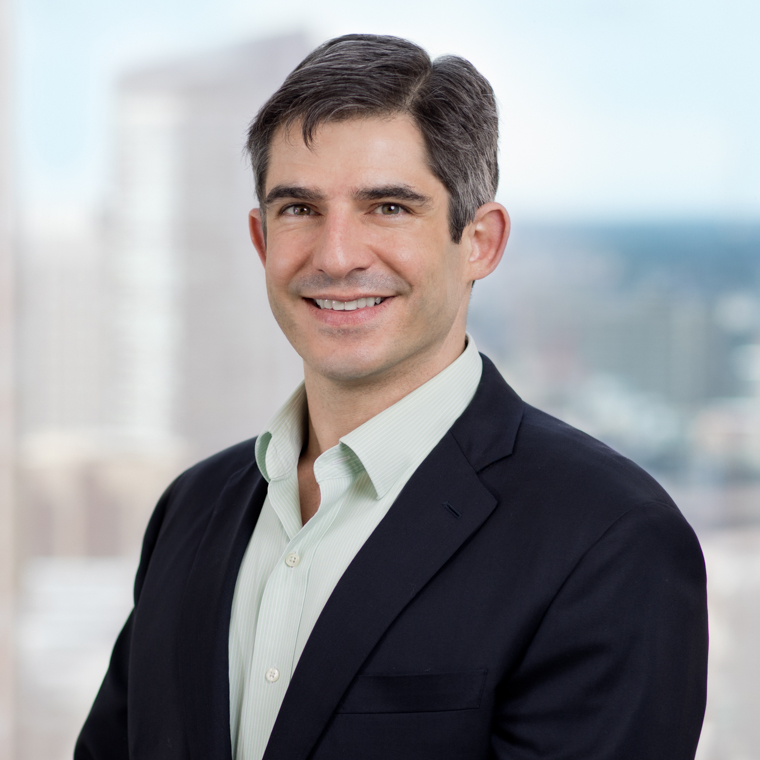
Felicia Ellsworth: Welcome to In the Public Interest, a podcast from WilmerHale. My name is Felicia Ellsworth.
Jekkie Kim: And I’m Jekkie Kim. Felicia and I are partners at WilmerHale, an international law firm that works at the intersection of government, innovation, and business. Today’s episode will kick off our new series on artificial intelligence. In this series, we will look at how AI is reshaping the legal landscape and consider what that means in practice for companies, boards, legal teams, and beyond. AI is already embedded into the day-to-day operations of many organizations. It is shaping how many companies innovate, operate, and make decisions. As AI technologies continue to advance and evolve, complex and novel legal questions are arising. Throughout this series, we’ll examine how AI implicates core areas of law, policy, and even ethics. We’ll talk about questions of ownership, responsibility, and oversight, and we’ll explore how boards, management teams, and legal departments are adapting as AI becomes more prevalent. We will also consider how these issues play out across specific industries such as tech, entertainment, and even the life sciences industry, where AI is increasingly integral to research development and commercialization of significant opportunities, while also bringing in additional legal and regulatory complexities. These thorny considerations are unfolding against the backdrop of a quickly evolving and oftentimes patchwork regulatory environment. From state-level developments in places like California, to comprehensive regulatory regimes emerging in the European Union, organizations are facing growing and fragmented rules governing the development and use of AI. The goal of our AI series is not simply to identify legal risk, but to provide practical insights. Each episode will meld legal analysis and real-world perspective to help business leaders, legal teams, and policymakers understand how the law is responding to AI and how they can thoughtfully position themselves as both AI technologies and the law continue to evolve. We’re glad you’re joining us, and we hope this series offers useful perspective on where the law is headed and what that means in practice. On to the interview, and thank you so much for listening.
Jekkie Kim: Today, we’re diving into one of the most fascinating and fast-evolving areas of intellectual property law: authorship in the age of AI. From the famous monkey selfie case to the latest court battles over generative AI, the question is, who or what can be an author? Joining me is Ariel Soiffer, also a corporate partner at WilmerHale, our new chair of AI Technology Transactions. He recently co-authored an article, “Primates and Processors, Authorship of Non-Human Authors from Monkey Selfies to Generative AI.” Ariel, welcome to the show.
Ariel Soiffer: Thanks, Jekkie. Great to join you.
Jekkie Kim: It starts with a case that many of us remember, the monkey selfie case. Can you remind our listeners what happened there and why it matters today?
Ariel Soiffer: Sure. The case involved a macaque named Naruto, who came upon a camera and, as one does, took a selfie. The case turned on whether Naruto could own copyright in his selfie. The court said no, animals can’t own copyrights. The Copyright Office later clarified that works created by nature, animals or plants, aren’t eligible for copyright. Even as that case was progressing in the 2010s, many of us were thinking about the implications going beyond animal-created materials to machine-created materials.
Jekkie Kim: Right, and now we have AI creating art, music, even writing legal briefs. So, the question is back, but in a much bigger way.
Ariel Soiffer: Exactly.
Jekkie Kim: Your article highlights Thaler v. Perlmutter as a landmark case. What happened there?
Ariel Soiffer: Dr. Stephen Thaler generated artwork using his AI system, the Creativity Machine, and then attempted to register a copyright for that artwork. In his application, he listed the AI system as the sole author. The Copyright Office denied the application, and both the District Court and the DC Circuit Court of Appeals agreed. Copyright requires human authorship. The court called human authorship a bedrock requirement of copyright law. So, as of now, machines can’t be authors.
Jekkie Kim: Bedrock requirement. Strong statement. But your article suggests the Copyright Office is taking a more nuanced approach than the courts, right?
Ariel Soiffer: Exactly. In its recent AI guidance, the Copyright Office said, if you just provide a prompt, even a detailed prompt, that’s not enough for copyright in the output because the AI fills in too many creative gaps. But maybe you have some rights in your prompt. If you provide expressive inputs, like a hand-drawn sketch, and use AI to modify it, your original contributions can be protected. And maybe the AI-generated content can be protected to the extent reflective of your inputs. If you modify AI outputs in a meaningful way, those modifications can qualify for protection under the Feist standard. And that standard is pretty low, so at least your modifications of the AI output may be protectable. In short, the more creative control you exert, the stronger your claim is to authorship and ownership.
Jekkie Kim: Interesting. So, it’s not black and white. It’s about how much the human is really shaping the work.
Ariel Soiffer: That’s exactly right. You can imagine it as shades of gray making a painting, and that painting draws a line between using AI as a tool and using AI as a stand-in for human creativity. If we want to talk about images, I was at the Harvard IP conference last year, and they put out this AI-generated image. It was of a dragon, and the dragon had one wing. The other wing wasn’t there. And I noticed it, and I was like, wait a minute, how is nobody talking about the fact that there’s this absolutely amazing rendering of a dragon, and it only has one wing?
Jekkie Kim: So, under the AI guidance from the Copyright Office, let’s assume that you or I modified this AI output by adding an extra wing and this was a very creative-looking image of a dragon. Can I argue that this dragon with both wings is now copyright protectable?
Ariel Soiffer: Based on the guidance that we have from the Copyright Office, the part that is protectable is the additional wing that you would draw. If I were to draw it, it would be atrocious. So, it would have to be you. But if you drew the wing, that wing would be protectable by copyright. That part of the drawing would be protectable. But the whole image itself would not be protectable. Just the part that you modified, that you created yourself. Part of what I think is interesting, and this is sort of a tangent, is AI will be authoritative and sometimes accurate. And this is one example where you have an AI system generate an image of a dragon, but it’s missing a wing. And so, it’s important to have human review, and then that human review can be used to add something to it, and the part that you add to it can then be protected by copyright.
Jekkie Kim: That’s really fascinating. You also mentioned in your article that the courts basically said, hey, Congress needs to step in. Why is that?
Ariel Soiffer: I’m going to answer that with a bit of history. Our current situation mirrors earlier questions about whether photographs were protectable by copyright. At that time, Congress passed a law, and the Supreme Court upheld that law, that photographs are protectable by copyright. In a similar manner, the law hasn’t caught up with technology on AI-generated output. The Copyright Act was written for a world where humans were authors because there was no option other than humans. Now, with AI, that assumption is being challenged. The DC Circuit even hinted that a constitutional challenge could come if Congress changes the law to allow non-human authors. But until then, the rule is clear. A natural person must be the author for there to be ownership of the output.
Jekkie Kim: So, for creators and companies that are using AI, what practical advice can we provide right now?
Ariel Soiffer: I think the most important thing is to document your creative contributions. The more that you can show that you directed, selected, and modified the output, the better your chances are of securing protection for that output. This matters for companies that are using AI to generate new content, which could be anything from financial research to software code, among many other options. It matters for investors or acquirers as well, who want to understand whether their target owns the relevant IP. And this matters for content licensors and licensees who want to know what is or isn’t protectable by copyright.
Jekkie Kim: Ariel, this is very interesting. As a follow-up to that, if AI generates a unique and novel software code, based on the AI guidance from the Copyright Office, that code is not going to be copyright protectable. However, can there be an argument that if I add on a unique and novel portion of a software to the software that the AI generated, then my portion of the software can then be copyright protected?
Ariel Soiffer: Jekkie, that’s correct, and that creates a management challenge for companies now. It’s really important to track and trace and understand what part of the code was generated by the AI system and what part of the code was generated by a human. In some ways, this is like what people do and did for open source code. The additional complication is there is no open source library that we can refer back to. Instead, a company has to be careful and create processes to manage this and understand, okay, this code came from an AI system, so now I need to make sure that I have that original AI-generated code, and then the modification I want to keep as well so that I can say, here are all of the ways that we’ve evolved that code. If we ever need to, we can prove what we own.
Jekkie Kim: This has been such an insightful conversation from monkey selfies to machine-made art. The question of authorship is really only getting more complex. To our listeners, if you want to read Ariel’s full article, we will link it in the show notes. Ariel, thanks for joining and breaking this all down for us.
Ariel Soiffer: Thanks for having me, Jekkie. It’s been a pleasure.
Felicia Ellsworth: And thank you to our listeners. If you enjoyed this podcast, please take a minute to share with a friend and subscribe, rate, and review us wherever you listen to your podcasts. If you have any questions regarding this episode, please e-mail them to us at [email protected].
Jekkie Kim: For our WilmerHale alumni in the audience, if you haven’t already, please join our alumni center at alumni.wilmerhale.com so we can stay better connected. Special thank you to the producer of this episode, Noah Levin. Sound engineering and editing by Bryan Benenati, marketing by Allison Khan and Alexandra Thimble, all under the leadership of executive producers Jake Brownell, Kaylene Khosla, and Arpi Youssoufian. Thank you for listening.
Felicia Ellsworth: See you next time on In the Public Interest.