Felicia Ellsworth: Welcome to In the Public Interest, a podcast from WilmerHale. My name is Felicia Ellsworth.
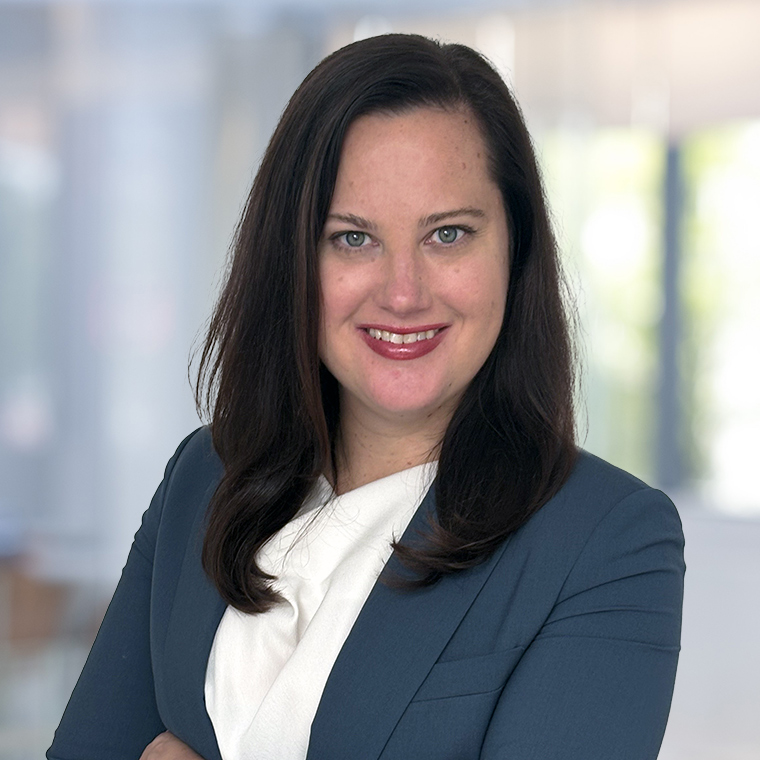
Jekkie Kim: And I’m Jekkie Kim. Felicia and I are partners at WilmerHale, an international law firm that works at the intersection of government, innovation, and business. We’re thrilled to welcome Susan Musser to the show today, a partner in our Washington DC office who recently joined WilmerHale’s Antitrust Practice. Susan brings an extraordinary depth of experience shaped by more than 15 years in both public service and private practice that has placed her at the center of some of the most consequential antitrust matters in recent years. Susan’s experience as the former Acting Bureau Director and Chief Trial Counsel of the US Federal Trade Commission’s Bureau of Competition, as well as her work as both a civil and criminal trial attorney of the US Department of Justice’s Antitrust divisions, positions her as one of the very few antitrust practitioners with experience at both agencies. At the FTC, she oversaw litigation strategy, coordinated enforcement priorities with the Department of Justice, and led trial teams in high-profile merger challenges and competition cases. We invited Susan on the podcast today to discuss developments in the FTC’s approach to antitrust over the past few administrations, including now under President Trump’s second administration, and what these developments may signal for the path ahead.
Jekkie Kim: Susan, it’s so great to speak with you today and welcome to the show.
Susan Musser: Thank you so much. It’s great to be here.
Jekkie Kim: We are very excited to speak with you today because you’ve had such a unique experience having worked in both private practice and in two different government agencies: the Department of Justice and the Federal Trade Commission. For those listening in who may not be familiar, tell us about how the two agencies work both separately and together on issues of antitrust.
Susan Musser: Absolutely. I think it can be difficult to navigate for folks who are just dipping their toe into what is antitrust and how the federal agencies enforce it. I like to think of their responsibilities as a Venn diagram, starting with what they do. They both investigate and enforce civil antitrust issues, and that comes in two buckets. The first is civil mergers. Our antitrust laws say that if a merger is big enough, someone needs to review it before the deal is executed in order to make sure that there’s nothing anti-competitive there. The reason being that once the deal is done, it’s going to be a lot harder to unwind. Both the FTC and the DOJ have responsibility for looking at those deals. They also look at conduct that might violate the antitrust laws civilly. I actually teach antitrust, and I always like to start my course by saying antitrust is fascinating because our operative statute, the Sherman Act, does everything and nothing all at once. What antitrust agencies look for is are you too big and you’re doing something that hurts competition with your power, or are you making agreements that are going to impact the market in a way that’s anti-competitive? At a real basic level, that’s what the conduct laws look at. Now what’s different? The DOJ on their side actually has criminal authority to investigate and prosecute both individuals and companies for violating the antitrust laws. The FTC can’t do that. The FTC on their side have a broader authority to use administrative rulemaking to issue rules to get at unfair competition issues or consumer protection issues. During the last administration, Chair Khan issued a rule banning all noncompetes. That’s an aggressive example of the FTC’s power. The FTC also has its own in-house administrative proceedings where they can try cases and enforce the laws in their own in-house proceeding as well.
Jekkie Kim: So, most of your time at the FTC from 2020 to late 2025—until you joined us here at WilmerHale—involved working with Lena Khan at the FTC and Jonathan Kanter at the DOJ, who was the Assistant Attorney General for the Antitrust Division. Tell us a bit about each of Khan’s and Kanter’s approach on how the government thought about antitrust and how this played out in practice.
Susan Musser: So, I’m going to take us back a little bit. Starting in the ’70s and ’80s, you saw a movement of what was called the Chicago School of Antitrust, which is an economic approach to how you analyze any sort of antitrust harm. They did that by looking at how it impacts prices or output, because a core tenet of that economic thinking is if there’s more of something or something is cheaper, it’s better. We all can relate to that as consumers, but that was a very strict and narrow focus on the harm that antitrust laws were supposed to prevent. And that lasted for two or three decades. Lena and Jonathan were part of this movement called the Neo-Brandeisians. There’s this whole zeitgeist around Lena Khan, and she published this law review article that got quite a bit of traction and a lot of political support. And that manifested in the 2020 election by both her getting appointed as chair of the FTC and then Jonathan Kanter getting appointed as AAG of the Department of Justice. And it was a really interesting time to be part of the agency, because in some ways, the law is the law. I’m a litigator, I’m bound by case law, and what does that mean when you have someone coming in who’s saying, we really want to shift the focus from the way that courts and agencies have been looking at it over the past two decades and really change how we’re thinking about the antitrust laws? This philosophy manifested in a couple ways. First, probably to no surprise, there was a shift in the lens through which Lena wanted to look at harm. I think Lena really wanted to take into account the whole disparate impact of the merger besides that strict, is price going to increase or lower? It was a much more aggressive way to look at things.
Jekkie Kim: On the transactional side, when we do deals, at the very beginning, we try to ascertain whether or not this deal would be subject to antitrust review. And the first thing we look at is the size of the deal. And then the second thing would be the market, the potential monopoly in the event these two parties merge or the asset is sold. But when we start getting into the quality aspects of a potential antitrust review, there is some uncertainty in the market with respect to what antitrust would be measured by. Were there any discussions around creating uncertainty, how the agencies would review quality?
Susan Musser: That’s a fascinating question. I think there was probably a disconnect from the leadership of the FTC and then the staff attorneys. They wanted to reframe the Clayton Act as the anti-monopoly act. So, to the extent that there was uncertainty, there were some who viewed that as a feature, not a bug. Because when companies are faced with uncertainty, there’s hesitation and companies most of the time are just not going to do deals generally, which I think from the Brandeisian perspective is a good thing. I think from the staff perspective, it’s not something that’s easily measured. You have to look at it from a qualitative standpoint of, is it going to make things harder? Are there incentives to innovate? The easiest case is when you have Company A, who isn’t known for an innovative approach, has done the same thing for generations, hasn’t brought a new product to the market, merging with Company B, who’s very innovative. I think the agencies look at how that innovation is going to be impacted. Now, that’s almost impossible to measure. When you think about how to present that to the court, the documents are telling the story. They have all these structures in place that facilitate that innovation, and this other company doesn’t. But to your point, if you’re trying to analyze it, it’s really tough to take that into account. Another way to look at it too is just the comparative quality, A side and B side. And you see this a lot in hospital deals. I tried one deal where the companies at trial were trying to say, we have a great company buying a not so good company, a rising tide lifts all boats. But you can also see where that can flip, where you have a company who’s not known for all of these great processes and improvements who are buying a good hospital that could all go down. But it’s all, in my view, more about narrative and developing that. And it’s much harder to analyze and give people clear guidance on what that would look like.
Jekkie Kim: This is fascinating. I think you’re the perfect person to provide these types of insights, especially because you served in two consecutive administrations, the Biden Administration and President Trump’s second term, and the people you worked with at the FTC and the DOJ changed. How did things then change or not change, and how are things being applied in real practice?
Susan Musser: Let me start by saying what’s similar. I think you still have an administration that is focused on using antitrust as a tool, not just to address a narrow set of harms, to instead use it to its full extent to combat issues beyond that. For example, we’ve seen recently a focus on particular industries and the feeling that those industries have a problem. I’m using the word "feeling" really intentionally here, that antitrust could have tools to fix it. To be concrete about it, there was an executive order directing the Department of Justice to institute an investigation into the meatpacking industry. The harm here is that there’s consolidation, that the ranchers aren’t receiving the prices that they should for their cattle. The consumers are paying too much for that same product, so someone somewhere must be doing something bad, and antitrust is a solution. The core of that is very similar between the two administrations. I think there’s also been a focus on particular industries; for example, Chairman Ferguson has been focused on rural industries, rural communities, and anything that is affecting American pocketbooks.
Jekkie Kim: I can see that there is a public perception of certain issues that the government is trying to address through the tools of antitrust.
Susan Musser: Yes, and I think that’s very similar. But to what’s different, I spoke a little bit about the Noncompete Rule and the use of the administrative authority. That has really shifted in the Trump Administration from a broader level. This administration wants to consolidate executive power. There’s been a chipping away at the use of administrative agencies. There was an executive order within the first month saying that the Department of Justice was no longer arguing that Humphrey’s Executor—despite being almost 100-year-old Supreme Court precedent—was good law. Chairman Ferguson also espousing those views. At one point he’s called the administrative process un-American and has really shifted the way that he’s using that part of the FTC’s capabilities and has said focus on the tools that he has as more of a federal court enforcer.
Jekkie Kim: You are in DC. I’m in Silicon Valley. How do you see tech companies and AI companies being affected by antitrust as a tool used by the DOJ and the FTC in the current administration in the coming years?
Susan Musser: Not to be too lawyerly about it, but I’d like to focus my answer on AI companies, which is different than AI as a tool, which affects a different part of the antitrust question. So, you have two companies that have some part of the AI tech stack. How is this new administration shift going to impact them? On one hand, you have the executive order targeting AI that says that it needs to be American-first. What does that mean? So, Chairman Ferguson, he’s going to be really cautious to make sure that if he’s reviewing a transaction, that it’s not going to disadvantage those companies’ ability to compete vis-a-vis China. But I think what we’ve seen in the last month or so, that doesn’t mean that Chairman Ferguson is going to give companies in the AI tech stack a pass. I do think that everyone understands AI is the next big thing. We have all these companies right now fighting it out, and there’s going to be some winners. What we’re hearing Andrew Ferguson saying is, I want to be involved in making sure how those winners are selected is fair, but he’s going to have to be balanced by making sure that whatever he does is on the right side of how President Trump is viewing companies’ ability to compete. And that’s going to be a tough balance for him to navigate.
Jekkie Kim: This is so insightful. I love this conversation.
Susan Musser: Yeah. I think it’s a really interesting time. As an antitrust practitioner, I practice across industries. I’ve looked at next -generation sequencing technology, some pretty complicated defense industry components, airlines, credit cards, this whole panoply of products. Anything can raise antitrust concerns. So, you have to have a statute that’s flexible enough to adapt to whatever situation and technology that you have, but you also are dealing with case law that is giving you tools and factors to consider that maybe aren’t applicable to one of these newer technologies. So, it’s a really interesting tension between this desire to fully use antitrust as an enforcement tool by the agencies with technology that’s so ever-changing and it’s honestly a little hard for people to grasp. It takes a lot to truly understand how a tech stack works. That is hard, and with a market that’s changing a ton, it makes it not always an easy fit to try and achieve the aims that the agencies may want to achieve.
Jekkie Kim: Well, it would be such a loss if I didn’t ask a personal question about how you developed your career. You have such a unique path. What were some of the important decision points that you’ve had over the years?
Susan Musser: I was very fortunate to have the wrong things happen to me at the right time and the right things happen to me at the right time. There have been some major disappointments that as a 25-year-old who paid her own way through law school, graduating in a financial crisis was not something that I would wish on anyone. And then I happened to have the right thing happen to me at the right time. I was like, okay, I guess I’ll apply to the Department of Justice Honors Program and saw that antitrust was hiring the most. I’m like, well, I have a background in math and economics, so I applied and got the job. Once I got into the Department of Justice, it satisfied this part of me that was really curious to learn about a new industry and to try and understand things. I really liked that and I found it really invigorating. But again, thought I wanted to be an investigator, did the wrong thing, got on an investigation. I was like, this is fine. But I ended up being on the case and falling in love with litigation and loved the adrenaline rush of, you don’t have as much time. You have to learn this industry better than anyone else. You have to understand the incentives. You have to understand what the narrative is, the story is, and you have to take this complicated industry and the complicated area of the law and make it understandable and to tell a compelling story. That ignited something in me that I think is still really fueling me today and something that’s driven a lot of my decisions to go to private practice and get an experience on the other side of the aisle and then to go to the Federal Trade Commission, where they were hiring someone just to litigate. I was very fortunate to have a lot of the right things happen at the right time and some cases fall into my lap that have really made my career. I really think it was just being very curious and being driven by this love of learning and I think that’s something that just makes it fun.
Jekkie Kim: That’s lovely. Well, welcome again to WilmerHale. It’s such a pleasure and thanks for all of the wisdom. I learned a lot. Thank you.
Susan Musser: Thank you so much.
Felicia Ellsworth: And thank you to our listeners. If you enjoy this podcast, please take a minute to share with a friend and subscribe, rate, and review us wherever you listen to your podcasts. If you have any questions regarding this episode, please email them to us at [email protected].
Jekkie Kim: For our WilmerHale alumni in the audience, if you haven’t already, please join our alumni center at alumni.wilmerhale.com so we can stay better connected. Special thank you to the producers of this episode, Eugena Liu and Mallory Shaner. Sound engineering and editing by Bryan Benenati. Marketing by Allison Khan and Alexandra Thimble, all under the leadership of executive producers Jake Brownell, Kaylene Khosla and Arpi Youssoufian. Thank you for listening.
Felicia Ellsworth: See you next time on In the Public Interest.