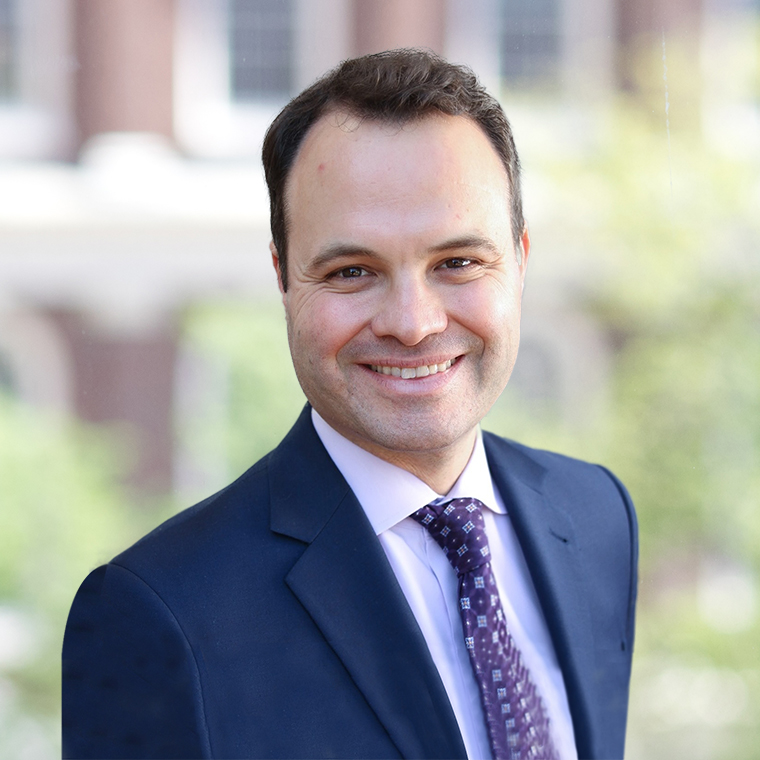
Felicia Ellsworth: Welcome to In the Public Interest, a podcast from WilmerHale. My name is Felicia Ellsworth, and I'm a partner at WilmerHale, an international law firm that works at the intersection of government, technology and business. For today's episode, I'm pleased to share an important update. Our portal for direct applications to our 2027 Summer Associate Program is open. If you're a law student considering joining us for the summer of 2027, this is the time to begin the process. Now, you may be thinking, 2027? That's a year and a half away. That's completely understandable as a reaction, and applying so far in advance can feel daunting. But this timeline is now the standard. It allows both you and our team ample time to prepare, ensuring that when the summer arrives, everything is in place for a meaningful and productive experience. So if you're feeling uncertain, let me offer you some reassurance. You don't need to have every detail of your career mapped out today. This is simply one step in a much longer journey.
As you move through the application process, here are a few recommendations. Be authentic. We're not seeking perfection. We value individuals who demonstrate genuine interest in the work we do. Do your research. Familiarize yourself with our practice areas, our culture and what sets us apart. This will help you craft a thoughtful application and prepare for interviews. And finally, stay engaged in law school. Academic performance matters, but so does involvement, whether through journals, clinics or pro bono work. Please don't hesitate to reach out if you have questions about the process or about life at the firm. Our recruiting team is here to assist you. The best place to start is by navigating to the Careers tab on wilmerhale.com, where you'll find a link to our 2L summer application, as well as a list of hiring contacts for each office. So to summarize: the portal is open, the timeline is typical and you're well positioned to succeed. We look forward to reviewing your applications and hopefully welcoming you in person soon. Before we conclude, I want to share a glimpse of what our summer program offers. Last year, we hosted a panel that featured two remarkable perspectives. One was our Senior Counsel Eric Lesser, who began his legal career here at WilmerHale as a summer associate. And then he took a quick detour, running for and being elected as a state senator in Massachusetts, where he served four terms. The other is Professor Cheryl Bratt, an alumna of the firm. Cheryl was a summer associate after her 2L year and is now associate professor of Practice at Boston College Law School. Their stories were inspiring and illustrated the diverse paths a legal career can take and how the experiences gained during their time as summer associates at WilmerHale had a lasting impact on their legal careers. It's a great way to give you a sense of what you might experience as part of our program. You won't want to miss it.
Felicia Ellsworth: Cheryl and Eric, thank you both so much for being here.
Cheryl Bratt: Thank you. Thanks for having us.
Eric Lesser: Yeah, thanks for having me.
Felicia Ellsworth: All right, so let's start at the beginning. Cheryl, can you first tell us what initially drew you to WilmerHale when you were looking for a summer associate position?
Cheryl Bratt: Yeah, so as a law student, I wanted a firm that would speak to my values, that had a backbone, and I wanted a place that would provide me with excellent training and really give me a way to develop and hone my skills. And I wanted a place that was friendly and collegial. Wilmer easily stood out. One of the things that really mattered to me was every level of lawyer is involved in pro bono work, from summer associates up to partners. I think that just spoke volumes to the kind of values that Wilmer has. And the work was really dynamic and very substantive, and I was doing things that felt important and not just busy work. And everyone I met was just great. And I found that to be the case throughout my time at Wilmer. I'm still in touch with a lot of folks, and I have fond memories of my experiences here, which I don't think is something that everyone will say after their big law experience.
Felicia Ellsworth: Eric, why WilmerHale as a summer?
Eric Lesser: For me, I think it was really that if you're interested in government and public policy, if you're interested in politics, WilmerHale really has no peer. There is just a long tradition and a long history of lawyers here doing work that has public sector and public policy significance. For me, that was really the appeal, the value the firm puts on public service and the centering that the firm really puts on its public mission. That's not necessarily the case across big law. It's definitely the case here. And there was another piece of WilmerHale that was unique that really appealed to me, which was the profile it has both in Boston and, of course, in Washington. And it's not limited to those two places. In Denver, our former colleague John Walsh is now the district attorney. Former Senator Ken Salazar is back. It's across the board. So for me, having been interested in politics, having been interested in government and public service, it was kind of a no-brainer, and it was really a place that I felt valued that experience uniquely.
Felicia Ellsworth: Eric, you didn't return to the firm for a number of years, so I'm going to direct this question to Cheryl. When you rejoined the firm, what were you hoping to accomplish and to do in the big law environment?
Cheryl Bratt: Yeah, so I really wanted to learn how to be an excellent litigator. I had gotten skills in law school and clerking, so I felt like a competent researcher and writer. But I didn't know all of the humanness to a litigation. I really wanted to dig into all the decision-making and strategizing in a case and coming up with the theory of the case and working with opposing counsel and the push and pull of that, all of the nuances of trying to reach the best result for your client, all of those dynamics that you can't really appreciate unless you're in it, and I just wanted to be in it. The other thing I really wanted to learn is just how to be an excellent advocate. And from my time on at Wilmer, I really leaned into that to really develop my voice as an advocate that was missing before.
Felicia Ellsworth: Eric, any particular anecdotes from your summer associate year that you remember, anything that sticks out?
Eric Lesser: I have a bunch of them, actually. Just to build off Cheryl's point, the mentorship is really something I remember very vividly. There was a lot of feedback on writing, and I felt like I grew a lot professionally from that experience. And also just spending time with people, listening to how problems were addressed, how challenges were confronted. Learning how you navigate that and how you build trust with your clients was something I really valued and felt like I learned a lot from.
Felicia Ellsworth: One of the reasons we invited both of you to join the podcast today is because you both have left Big Law, and Cheryl, at least for now, is firmly ensconced in academia. So Cheryl, tell us a little bit about that career transition.
Cheryl Bratt: There's a lot of different paths into academia, and mine was not a traditional one. I clerked and practiced, and I was successful at Wilmer, and I liked it. And this would be something new and daunting. But the people who I worked with, who I confided in about this interest, really gave me the confidence to try it out. And I'm forever grateful to have had that opportunity to do it, and then to have the backing of people who I worked with to actually forge the way
Felicia Ellsworth: Eric, you went straight into the public service. Talk a little bit about your decision not to return to private practice, but out of law school to go straight into the maelstrom of politics.
Eric Lesser: This may be a funny or interesting example of how facts can change. I remember doing my interview for my summer associate position at Wilmer, sitting with Mark Fleming, who was doing the hiring. I had worked in politics, done a lot of campaigns, coming off working in the Obama White House for several years. And he looked at my resume and he looked at me, he was like, “You don't want to go to a law firm. You want to be in politics. You want to work in government.” And I looked at him and I said, “Mark, I've gotten that out of my system.” So fast forward, I had a great experience here as a summer and had an offer to come back and was planning to come back. And the longtime state senator from the community where I grew up in, western Massachusetts announced that she was not running for re-election. To make a whole long story short, I decided to jump into that race. And I remember one of the first calls I made was to Mark because I had this offer. And I remember explaining to him I was thinking about running. And I remember Mark saying to me, “Go do it, jump in, and we'll be there and I'll support you.” I was like, okay, if he thinks it's okay, I might as well go try. And so I won by 192 votes. And a whole bunch of people who I was summers with drove out multiple times to knock on doors and help campaign. And I served for eight years in the Massachusetts State Senate. In a lot of ways, it is similar because at the end of the day, being in public office is about helping solve complex problems. And that's really at the heart of what legal counseling is about. And both are positions of public trust. They're very, very different jobs, but it was really a great experience. And I was grateful for the foundation that summer gave me and for the confidence that helped give me to chart a different course and take a really big risk.
Felicia Ellsworth: You both are professors, Cheryl full-time, Eric you do it as an adjunct. Let's talk a little bit about how your experience at WilmerHale has informed some of the teaching that you do and the way you think about being a law professor.
Cheryl Bratt: In so many ways. So I teach the first year of lawyering skills course. And I think back on my experience at Wilmer, and I'm trying to incorporate those skills that I learned and honed when I was here. And I really want my course to feel authentic so that students get a taste of what it's actually like to work in a law office. Now, obviously, I'm not recreating it one-to-one. I don't make them keep track of their time, but I do try to bring in real-world examples and create authentic assignments so that the students have a general sense of the work. One of the things that I do is I make my students do a research assignment, and then they have to come talk to me about it in my office. So they have to do all the things. They have to knock on my door and ask, “Is now still a good time?” They have to come in and talk to me about the research that they did. And then I'm busy and being like, wait, remind me of this case again? They have to back up and give me the facts. And I'm probing their research trail, probing the substance, talking about the client, and how are we going to break this news to the client? I love that because I remember having to do that all the time as an associate, you write this memo and you're like, you send that e-mail and you're like, okay, I did the thing. And then the person who you wrote it to calls you in and is like, talk to me about this thing. And I wanted them to have that experience doing it so that they're ready to hit the ground running when they start off.
Felicia Ellsworth: Eric, what about you? You do a little bit of it now that you're here. How do you balance those things?
Eric Lesser: Cheryl’s way more of a real professor than me. So I've taught the same module now for a couple different schools, and it's actually very relevant to the practice I now have at WilmerHale. The elements of success in government I describe as the three Ps: policy, politics and press. Policy is the substance. You have to know what you're talking about, or someone else who knows the substance better is going to run circles around you. You have to know the small P politics. Who are you going to make angry with the position you're taking? Who are you going to make happy? How are you going to square that circle and get whatever it is you need to define success? Then the final element is press or really public. And so we work through those examples with the students. And that's kind of what we do with our clients. Part of that is what we describe as 360-degree counseling. Understanding the message, the organization, the stakeholders, the people that are involved, understanding the resources that they're going to need. Understanding, obviously, the underlying law and facts and policy and substance, because that's going to drive everything.
Felicia Ellsworth: We've got summer associates across all of our offices joining us live, and then also junior and other early career attorneys will be listening to this podcast when we publish it. So I ask you all to go back in time. I won't say how long. What advice would you give to your summer associate or junior associate self?
Eric Lesser: I'd say a couple of things. One is your career is jazz rather than classical music. There's a little bit of a feeling, especially when you're coming right out of law school, that things are going to march through in a very ordered sequence. I think it's okay to let your hands off the reins a bit, work seriously, stay focused on what you're doing on any given moment, but you don't have to have it all planned out. And so I think the advice I would give is your career is going to unfold in all kinds of ways that are really exciting that you can't even really imagine right now. And the best thing you can do is just enjoy the ride and try to do your best each day and see what opportunities come your way.
Cheryl Bratt: I totally echo that. I remember fretting so much, trying to always look around the corner and see how I was going to build my career, as opposed to just taking a beat, staying more present, and trusting that my career would unfold and opportunities would arise. And when the timing was right and when it made sense, I would seize them. And I so regret all of the hand-wringing that I did as a junior lawyer and summer associate. There's no one right choice. There's a lot of right choices, and it changes depending on who you are and how your life is unfolding. I think the other thing I would say is to encourage you all to lean into the learning part of all of this. There is so much that you won't learn in law school, that you're just going to learn on the ground. You're not going to be perfect, and that's okay. The core things of doing your best, being collegial, trying to solve problems, even if you're the ones who create them accidentally, those are the things that matter and that will carry you through. And those are the things that supervisors are going to remember and want to continue working with you. The last thing that I'll say, which was advice that I got my summer, was there are no rough drafts. There are only first drafts. Really owning the work product that you produce and making it excellent no matter what stage you're turning it into. So one really granular, concrete thing, and then broad life lessons for you to take.
Felicia Ellsworth: Before we wrap, what would you say to all the summer associates and the young lawyers that will listen to this about career transitions? Eric, you've had a transition in and out. Cheryl, you made a transition after a couple of years. What advice would you provide about that?
Cheryl Bratt: I think one thing to always be cognizant of is that you are building your network from the first day you entered into law school, even before that, but really in law school. And just to realize that the legal community is much smaller than we ever think it is. Develop the relationships with the people who you work with. As an example, I summered here, I met Felicia, I went off to clerk. She did an oral argument at the First Circuit while I was a law clerk. And so we got to connect again that day. I came back to practice here, and I worked with Felicia. And then had these fellowships and went off different places. But when I was at Harvard, I actually invited Felicia back to speak to my students. And I'm so excited that I get to be here with you today to continue this relationship that we've had and how meaningful that is. I can think back to so many different people who I met when I was here, and they're still part of this broader network that I do feel like I can reach out to, whether it's connecting my students with them or calling them up and asking, “Does this make sense if I teach it this way? Does that resonate?” People who I worked with, who I summered with, some are still here, some are now partners here. But so many people have gone off into different careers too. And I'm so grateful for the network that I got to develop from my time here. So be aware of that and use it and you will use it and embrace that.
Felicia Ellsworth: Eric, any final words?
Eric Lesser: When I was just starting out in the state Senate, one of the pieces of advice I got was go make a point of introducing yourself to every other member of the Senate. So I called, texted, emailed everyone, asked to go have coffees or grab lunch. And I went to go see one of the old bulls, real diehard old school guys. And we were sitting there and he said to me, “Hey, Lesser, what's the most important vote you're ever going to take?” I don't know, the state budget is like $40 billion? He's like, nah, budgets happen every year. I said, “I don't know, the leadership, the Senate president?” He's like, nah, Senate presidents come and go. I don't know. He goes, “Lesser, the most important vote is the next vote.” When I came back to the firm, I've tried to follow it the same way, get to know everyone and to focus on what's next, because that's really the key. You're about to have a transition when you graduate law school. You're going to have all kinds of personal transitions, professional transitions. Just focus on what's next and focus on getting to know the people around you. That's really what it's going to be all about.
Felicia Ellsworth: Well, great. Thank you so much, Cheryl and Eric, both of you, for joining. We really appreciate your time and the thoughtful advice and commentary. So thank you.
Cheryl Bratt: My pleasure. It was lovely.
Eric Lesser: Thank you.
Felicia Ellsworth: And thank you to our listeners for tuning in to this episode of In the Public Interest. We hope you'll join us for our next episode. If you enjoy this podcast, please take a minute to share with a friend and subscribe, rate, and review us wherever you listen to your podcasts. If you have any questions regarding this episode, please e-mail them to us at [email protected]. For all of our WilmerHale alumni in the audience, thank you for listening. We are really proud of our extended community, including alumni in the government, the nonprofit space, academia, other firms, and in leadership positions and corporations around the world. If you haven't already, please join our alumni center at alumni.wilmerhale.com so we can stay better connected. Special thank you to the producers of this episode, Zachary Mollendor and Arpi Youssoufian. Sound engineering and editing by Bryan Benenati. Marketing by Andy Basford and Alexandra Thimble, all under the leadership of executive producers Kaylene Khosla and Jake Brownell. See you next time on In the Public Interest.